Browse BuildersHow It Works
For Builders (Add Listing)

Illinois Pole Barn Builders: Cost, Permits, and Top Cities (2026)

Illinois pole barn builders operate in the heart of the American corn belt — a market defined by grain storage, hog and livestock facilities, and equipment buildings on the state's massive row-crop farms. Post-frame construction is the standard building technology for Illinois agriculture, and the state supports a dense network of regional builders who specialize in grain bins, machine sheds, hog confinement buildings, and turkey facilities. Away from the agricultural heartland, the Chicago suburban exurbs and the Springfield-Peoria corridor are generating growing demand for residential workshops, garages, and barndominiums.

This directory lists verified Illinois pole barn builders organized by region — from the Chicago suburbs through Central Illinois and the agricultural heartland to Southern Illinois. Each profile links to the full business record with specialties and service area. Find a builder by city, or browse the featured list and regional breakdown below.

Post-Frame Construction in Illinois

Post-frame construction dominates Illinois's agricultural building market. The state is one of the top corn and soybean-producing states in the country, and grain storage infrastructure — post-frame grain bins, flat storage buildings, and machine sheds — is a multi-billion-dollar market served by specialized regional builders. Illinois has a continental climate with cold winters across the state. Ground snow loads range from 20 psf in southern IL to 30–35 psf in the Chicago area and northern IL. Post-frame grain storage and livestock buildings are the dominant use case in the agricultural heartland. The permitting landscape in Illinois is fragmented: Many Illinois rural townships have no adopted building code and do not require permits for agricultural structures. In areas with an adopted code, farm buildings used for agricultural purposes may qualify for reduced requirements. This means agricultural pole barns in rural Illinois often have a straightforward path to construction.

Featured Illinois Pole Barn Builders

122 verified builders in Illinois (IL). The list below ranks builders by verified reviews and rating; every card links to the full profile with phone, website, photos, and service detail.

Countryside Barns - Pole Barn Builder in Eureka, Illinois
Stock

Countryside Barns

Eureka, Illinois
4.9
207 Reviews
AgriculturalCommercialMetal Building
Danley’s Garages - Pole Barn Builder in Rosemont, Illinois
Stock

Danley’s Garages

Rosemont, Illinois
4.1
553 Reviews
Cardinal Portable Buildings - Pole Barn Builder in Harrisburg, Illinois
Stock

Cardinal Portable Buildings

Harrisburg, Illinois
4.9
189 Reviews
Chicago Garage Builders - Pole Barn Builder in Chicago, Illinois
Stock

Chicago Garage Builders

Chicago, Illinois
5.0
125 Reviews
Stanley Garage Builders Chicago - Pole Barn Builder in Chicago, Illinois
Stock
4.8
146 Reviews
Tuff Shed Palatine - Pole Barn Builder in Palatine, Illinois
Stock

Tuff Shed Palatine

Palatine, Illinois
4.9
130 Reviews
Fisher Garages - Pole Barn Builder in Chicago, Illinois
Stock

Fisher Garages

Chicago, Illinois
4.9
117 Reviews
Better Built Garages & Doors - Pole Barn Builder in Monee, Illinois
Stock
4.3
206 Reviews
K&K Storage Barns, LLC - Pole Barn Builder in Benton, Illinois
Stock

K&K Storage Barns, LLC

Benton, Illinois
4.9
104 Reviews
Thompson's Sales - Pole Barn Builder in Mattoon, Illinois
Stock

Thompson's Sales

Mattoon, Illinois
4.9
76 Reviews
American Beam & Steel, Inc. - Pole Barn Builder in Orland Park, Illinois
Stock

American Beam & Steel, Inc.

Orland Park, Illinois
5.0
67 Reviews
Pole BarnShed
Absolute Garage Builders - Pole Barn Builder in Chicago, Illinois
Stock

Absolute Garage Builders

Chicago, Illinois
4.6
97 Reviews

Pole Barn Builders by Illinois Region

Northern Illinois & Chicago Suburbs

Northern Illinois — from the Chicago collar counties (Kane, DuPage, Will, Kendall, McHenry) through Rockford and DeKalb — is a mixed market with both suburban residential and agricultural post-frame demand. The Chicago exurbs generate strong demand for workshops, horse barns, and residential garages on rural parcels. North of the city, the traditional dairy and crop farming belt supports working-farm equipment buildings and storage structures. Ground snow loads in northern Illinois run 25–35 psf, and builders here design accordingly.

Rockford, IL · soonElgin, IL · soonJoliet, IL · soonDeKalb, IL · soonDixon, IL · soon

Central Illinois

Central Illinois — Springfield, Peoria, Bloomington-Normal, Champaign-Urbana, Decatur, and the surrounding agricultural counties — is the heart of the state's corn and soybean belt and the most active post-frame market in Illinois. Machine sheds, grain storage structures, and hog confinement buildings are the dominant use cases in Livingston, McLean, DeWitt, and Macon counties. The Springfield and Peoria areas also support a residential barndominium market on large rural parcels in Sangamon, Logan, Tazewell, and Woodford counties.

Springfield, IL · soonPeoria, IL · soonBloomington, IL · soonChampaign, IL · soonDecatur, IL · soon

Southern Illinois

Southern Illinois — Carbondale, Marion, Mount Vernon, Centralia, and the Illinois delta country — is a distinct market from the agricultural heartland. Row-crop farming transitions to more mixed agriculture including timber, hunting ground, and recreational land. Post-frame demand includes equipment and hunting buildings, residential workshops, and some grain storage. Ground snow loads in southern IL (20–25 psf) are lower than the northern third. The Shawnee National Forest region drives demand for recreational and hunting cabin-style post-frame structures.

Carbondale, IL · soonMarion, IL · soonMount Vernon, IL · soonCentralia, IL · soonBelleville, IL · soon

Common Pole Barn Uses in Illinois

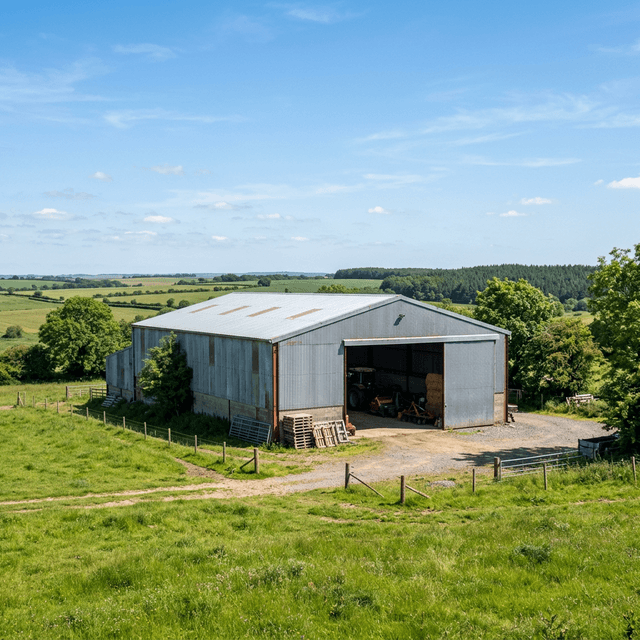
Illinois's pole barn market is dominated by agricultural use cases. Machine sheds — oversized equipment buildings covering combines, planters, sprayers, and tractors — are the single most common post-frame structure on Illinois row-crop farms. Grain storage buildings (flat storage and bin-support structures) are the second major category. Hog confinement and turkey house construction is concentrated in the central agricultural counties. The Chicago collar counties and Central Illinois are generating a growing residential market for workshops, garages, and barndominiums on 10–40 acre parcels. Horse barns are active in the northern collar counties where hobby farms are common.

How Much Does a Pole Barn Cost in Illinois?

Illinois pole barn costs run close to the national average, with lower labor rates in rural central and southern IL keeping agricultural building costs competitive. A basic 30×40 machine shed or storage building typically starts in the mid-teens; a finished workshop or garage runs $22,000–$50,000; and a residential barndominium can range from $55,000 to $150,000+ depending on finish level and location. Commercial grain storage and hog facility construction has specialized pricing. See our cost guide for a detailed breakdown. See the detailed cost guide →

Illinois Pole Barn FAQ

Do I need a permit to build a pole barn in Illinois?

Permitting requirements in Illinois vary significantly by location. Many Illinois rural townships have no adopted building code and do not require permits for agricultural structures. In areas with an adopted code, farm buildings used for agricultural purposes may qualify for reduced requirements. In incorporated areas and in townships that have adopted local building codes, permits will be required. Check with your specific township or county office — the patchwork of local code adoption in Illinois means requirements can differ between neighboring townships.

How much does a pole barn cost in Illinois?

Illinois pole barn costs range from about $14,000 for a basic machine shed shell to $55,000–$150,000+ for a finished barndominium. Northern Illinois carries slightly higher snow load engineering costs than the southern third. Rural central Illinois labor rates are lower than Chicago-area rates. Request multiple quotes from local contractors for your county and project type.

What snow load do pole barns need in Illinois?

Illinois ground snow loads are highest in the north (25–35 psf, per ASCE 7 maps) and decrease toward the south (15–20 psf in southern IL). The Chicago area and collar counties typically design to 25–30 psf. Your engineer calculates the required roof snow load from the ground snow load, local exposure, and building geometry. Make sure your quote includes proper snow load engineering for your county.

What is the difference between a machine shed and a grain storage building in Illinois?

A machine shed is an equipment building — a large clear-span structure (typically 50×100 to 80×180 feet) used to store combines, planters, sprayers, tractors, and other farm equipment. A grain storage building is designed for bulk grain storage, either as a flat storage structure (a low-profile building with a flat floor and aeration system) or a post-frame support structure for a bin. Both are post-frame, but machine sheds prioritize overhead clearance and door width, while grain storage prioritizes floor and wall strength to handle grain load.

Can I build a barndominium in Illinois?

Yes. Barndominiums are legal throughout Illinois and growing in the Chicago exurbs and Central Illinois. In areas without an adopted building code, requirements are minimal for non-residential structures; for residential occupancy, the structure must meet the Illinois Plumbing Code and other applicable residential standards. Confirm your specific township's requirements before designing.

How long does it take to build a pole barn in Illinois?

A typical 30×40 to 60×120 Illinois pole barn takes 4–10 weeks once any required permits are in hand. Winter construction is possible (Illinois builders work year-round) but concrete flatwork is typically scheduled for spring through fall. Agricultural machine sheds can often be turned around faster than residential barndominiums due to simpler systems.

What regions of Illinois have the most pole barn activity?

McLean, Livingston, Macon, DeWitt, and surrounding counties in central Illinois are the most active agricultural pole barn markets — the corn and soybean belt where machine sheds and grain storage drive most of the volume. The Chicago collar counties (Kane, Will, Kendall, Kendall, McHenry) drive the most residential activity. Southern Illinois is the slowest market due to lower farm density.

Do Illinois pole barn builders offer financing?

Some do. For agricultural structures, FSA and USDA loans are options for qualifying farms. Equipment building financing is sometimes available through dealer-affiliated lenders. For residential barndominiums, construction-to-permanent loans are the standard route. See our financing guide for details.

Ready to connect with an Illinois pole barn builder? Browse the directory above to find contractors in your region, review their profiles, and request a quote. If you're working through cost or permitting questions first, our cost guide and financing guide are good starting points.