Browse BuildersHow It Works
For Builders (Add Listing)

Indiana Pole Barn Builders: Cost, Permits, and Top Cities (2026)

Indiana pole barn builders operate in one of the Midwest's most active agricultural and residential post-frame markets. The state's corn-and-soybean belt — extending across most of central and northern Indiana — supports a constant demand for grain storage, machine sheds, and livestock facilities. At the same time, the Indianapolis metro's suburban fringe and the northern Indiana lake country are generating growing demand for residential workshops, barndominiums, and recreational buildings. Indiana's permitting environment is generally favorable for agricultural construction, with working farms benefiting from broad code exemptions.

This directory lists verified Indiana pole barn builders organized by region — from Northern Indiana and the South Bend area through the Indianapolis metro and down to Southern Indiana and the Ohio River valley. Each profile links to the full business record with specialties and service area. Find a builder by city using the city-specific pages, or browse the featured list and regional breakdown below.

Post-Frame Construction in Indiana

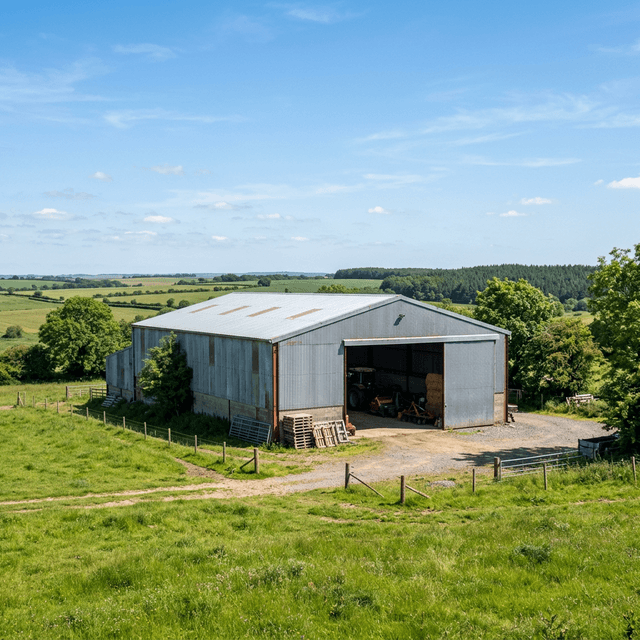
Post-frame construction is the default building technology for Indiana's agricultural sector. The state's crop farms — among the most productive in the Midwest — require large clear-span equipment buildings, grain storage infrastructure, and livestock facilities. Indiana has a continental climate with cold winters and moderate snow loads (20–30 psf statewide). Tornado risk is real through central and southern Indiana. Most post-frame construction serves the corn-and-soybean belt: grain storage, livestock facilities, and farm equipment buildings. Indiana's agricultural building exemption is broadly applied: Indiana agricultural buildings used on a working farm are generally exempt from the Indiana Building Code. Some counties have no building code at all for rural parcels. Confirm requirements with your county assessor and local building office. This means most farm buildings in rural Indiana have a straightforward permitting path.

Featured Indiana Pole Barn Builders

177 verified builders in Indiana (IN). The list below ranks builders by verified reviews and rating; every card links to the full profile with phone, website, photos, and service detail.

American Steel Carports, Inc. - Pole Barn Builder in Mt Summit, Indiana
Stock
4.7
1059 Reviews
Amish Sheds of Indiana - Pole Barn Builder in Angola, Indiana
Stock

Amish Sheds of Indiana

Angola, Indiana
4.9
221 Reviews
Sunrise Structures - Pole Barn Builder in Rochester, Indiana
Stock

Sunrise Structures

Rochester, Indiana
5.0
190 Reviews
Graber Post Buildings, Inc - Pole Barn Builder in Montgomery, Indiana
Stock

Graber Post Buildings, Inc

Montgomery, Indiana
4.6
296 Reviews
Raber Portable Storage Barns - Pole Barn Builder in Montgomery, Indiana
Stock

Raber Portable Storage Barns

Montgomery, Indiana
4.9
206 Reviews
Eagle Backyard Barns - Pole Barn Builder in Vincennes, Indiana
Stock

Eagle Backyard Barns

Vincennes, Indiana
5.0
176 Reviews
The Shed Superstore - Pole Barn Builder in Fort Wayne, Indiana
Stock

The Shed Superstore

Fort Wayne, Indiana
4.8
177 Reviews
Amish Sheds Direct of Ligonier - Pole Barn Builder in Ligonier, Indiana
Stock
5.0
120 Reviews
Northedge Steel - Pole Barn Builder in Yorktown, Indiana
Stock

Northedge Steel

Yorktown, Indiana
4.5
146 Reviews
AgriculturalCommercialMetal Building
Tina's Country Barns - Pole Barn Builder in Hebron, Indiana
Stock

Tina's Country Barns

Hebron, Indiana
5.0
80 Reviews
Raber Portable Storage Barns West Lafayette - Pole Barn Builder in West Lafayette, Indiana
Stock
4.8
91 Reviews
Backyard Barns and More - Pole Barn Builder in Fort Wayne, Indiana
Stock

Backyard Barns and More

Fort Wayne, Indiana
4.6
110 Reviews
AgriculturalCommercialMetal Building

Pole Barn Builders by Indiana Region

Northern Indiana

Northern Indiana — South Bend, Fort Wayne, Kokomo, Elkhart, Goshen, Warsaw, and the lake country — is a diverse market. The agricultural counties (Kosciusko, Whitley, Marshall, Fulton) drive demand for grain storage and equipment buildings. The Elkhart and Goshen area is home to a large RV-manufacturing industry that has also contributed to a culture of large workshop and storage buildings. The lake country (Syracuse, Warsaw, Angola) generates demand for recreational and lakeside storage buildings. Snow loads are highest in the state's northern tier: 25–35 psf in the lake-effect zone near Lake Michigan.

South Bend, IN · soonFort Wayne, IN · soonKokomo, IN · soonElkhart, IN · soonGoshen, IN · soon

Central Indiana / Indianapolis

Central Indiana — Indianapolis, Carmel, Muncie, Anderson, Terre Haute, Bloomington, and the surrounding agricultural counties — is the most active residential and mixed-use pole barn market in the state. The Indianapolis exurbs (Hamilton, Hendricks, Boone, Shelby, Johnson counties) drive a large barndominium and workshop market. The surrounding agricultural counties (Clinton, Tipton, Howard, Delaware) support the state's dense row-crop farming infrastructure. Builders based in Indianapolis, Noblesville, and Plainfield commonly service the full central Indiana corridor.

Indianapolis, IN · soonMuncie, IN · soonAnderson, IN · soonTerre Haute, IN · soonBloomington, IN · soon

Southern Indiana

Southern Indiana — Evansville, New Albany, Jeffersonville, Columbus, Seymour, and the Ohio River valley — is a distinct market from the agricultural north. The land transitions from flat row-crop farmland to rolling hills and heavier tree cover. Post-frame demand here is more varied: residential workshops and barndominiums on rural parcels, some livestock buildings, and recreational structures in the scenic hill country around Brown County and Monroe County. Evansville anchors the southwest; Columbus and Seymour are the major markets in the south-central corridor.

Evansville, IN · soonNew Albany, IN · soonColumbus, IN · soonSeymour, IN · soonBedford, IN · soon

Common Pole Barn Uses in Indiana

Indiana's pole barn market is anchored by agricultural use. Grain and soybean storage buildings — post-frame flat storage structures and bin support buildings — are common across the central and northern agricultural belt. Machine sheds covering combines, tractors, and planters are nearly universal on Indiana's large row-crop operations. Hog confinement buildings are concentrated in the northwest and central counties. On the residential side, workshops and garages are the dominant use case, particularly in the Indianapolis exurbs. Barndominiums are growing across rural Central Indiana. Northern Indiana's lake country drives recreational pole barn demand (boat storage, hunting buildings, hobby shops).

How Much Does a Pole Barn Cost in Indiana?

Indiana pole barn costs run slightly below the national average, reflecting the state's competitive contractor market and lower labor rates in agricultural areas. A basic 30×40 machine shed or storage building typically starts in the low-to-mid teens; a finished workshop or garage runs $20,000–$50,000; and a residential barndominium can range from $55,000 to $150,000+ depending on finish level and site work. Northern Indiana's lake-effect snow zone carries slightly higher structural costs than the south. See our cost guide for a detailed breakdown. See the detailed cost guide →

Indiana Pole Barn FAQ

Do I need a permit to build a pole barn in Indiana?

Indiana agricultural buildings used on a working farm are generally exempt from the Indiana Building Code. Some counties have no building code at all for rural parcels. Confirm requirements with your county assessor and local building office. For non-agricultural structures and for parcels in townships or municipalities that have adopted the Indiana Building Code, permits are required. Permit authority is local — your specific county or township office will confirm requirements.

How much does a pole barn cost in Indiana?

Indiana pole barn costs range from about $12,000–$16,000 for a basic agricultural shell to $55,000–$150,000+ for a finished barndominium. Northern Indiana lake-effect snow counties carry slightly higher engineering costs. Indianapolis-area labor rates are higher than rural county rates. Request multiple quotes from local contractors for your specific county and project type.

What snow load do pole barns need in Indiana?

Indiana ground snow loads are modest in the south (15–20 psf) and increase toward the north. The northern tier near Lake Michigan (Porter, LaPorte, St. Joseph counties) carries 25–35 psf due to lake-effect snow. Central Indiana typically designs to 20–25 psf. Make sure your builder's engineer uses the correct ground snow load for your county.

Can I build a barndominium in Indiana?

Yes. Barndominiums are legal and growing throughout Indiana, especially in the Indianapolis exurbs and the rural counties of central Indiana. They require a residential building permit where one is required and must meet the Indiana Residential Code. In townships without an adopted code, requirements are more limited. Confirm with your local zoning office before designing.

What is the RV and boat storage pole barn market in Northern Indiana?

Northern Indiana — especially the lake country around Warsaw, Syracuse, Angola, and Fort Wayne — has a large recreational storage pole barn market. Oversized garages and storage buildings for RVs, boats, snowmobiles, and ATVs are common use cases. These buildings typically run 30×60 to 40×80 with high overhead doors (14–16 feet) for RV clearance. Several Northern Indiana builders specialize in this use case.

How long does it take to build a pole barn in Indiana?

A typical 30×40 to 40×80 Indiana pole barn takes 4–10 weeks once any required permits are in hand. Agricultural structures in unregulated townships can move faster. Barndominiums with full interior finishes run 3–6 months. Winter construction is common in Indiana but concrete flatwork may be scheduled for spring through fall.

What are the best counties in Indiana for agricultural pole barn construction?

Kosciusko, Whitley, Fulton, and Cass counties in northern Indiana are among the most active agricultural markets. Clinton, Tipton, Boone, and Clinton counties in central Indiana are heavily agricultural with high machine shed and grain storage activity. Grant, Delaware, and Randolph counties in eastern Indiana also have active farm building markets. Most of these rural counties have straightforward or no permitting for agricultural structures.

Do Indiana pole barn builders offer financing?

Some do, directly or through partner lenders. FSA and USDA loans are options for qualifying agricultural structures. For barndominiums and residential builds, construction-to-permanent loans are the standard route. See our financing guide for details.

Ready to connect with an Indiana pole barn builder? Browse the directory above to find contractors in your region, review their profiles, and request a quote for your specific project. Our cost guide and financing guide linked throughout this page are useful resources if you're still working through design and budget questions.